Eco-Friendly Wedding.
How to Plan an Eco-Friendly Wedding (Without Sacrificing Style).
Weddings are incredible — but let’s be honest, they can also be wildly wasteful. Decorations used once, outfits worn for a single day, mountains of paper, flowers thrown away by morning. The good news? Planning an Eco-Friendly Wedding doesn’t mean compromising on style, personality, or atmosphere.
In fact, some of the most creative weddings I photograph are the ones where couples make intentional choices about what they use, where things come from, and what happens afterwards. Sustainability isn’t about perfection — it’s about making smarter decisions that reduce waste while still creating a day that feels completely yours.
Here’s how to build a wedding that looks incredible and leaves a lighter footprint.
Start With Intentional Choices, Not Perfection.
The biggest misconception about an eco-friendly wedding is that you have to change everything. You don’t.
Small decisions add up quickly. Choosing reusable décor, reducing paper waste, or sourcing locally can make a huge difference without changing the overall vibe of your day. Many couples now focus on a few key areas where impact is highest — food, flowers, stationery, and throwaway details.
Once you start viewing your wedding as a collection of conscious choices rather than traditions you have to follow, planning suddenly becomes much easier.
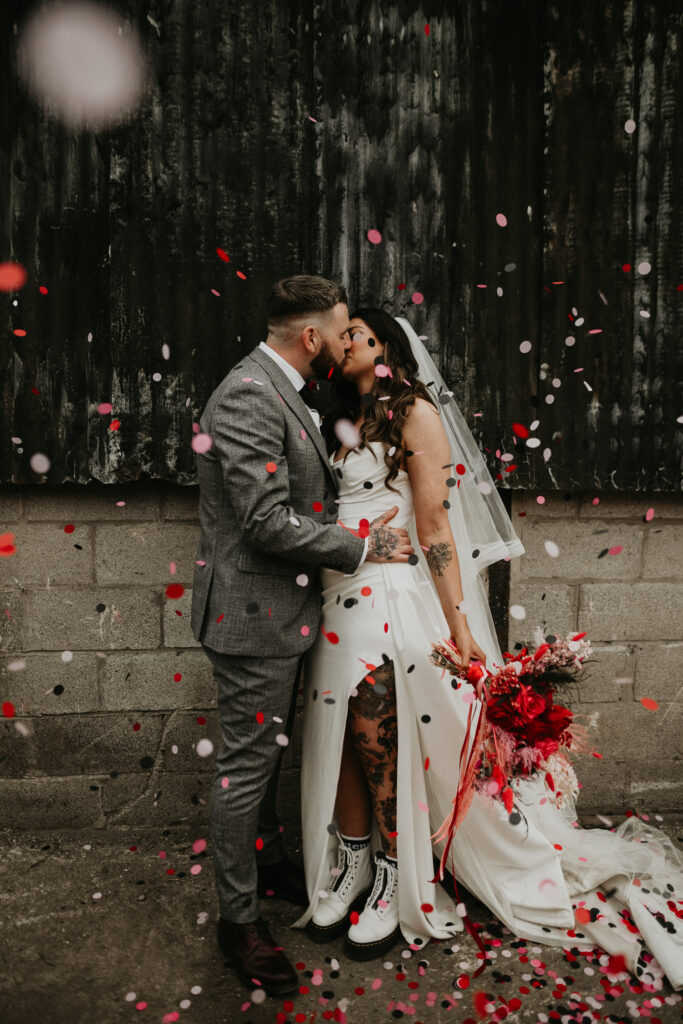
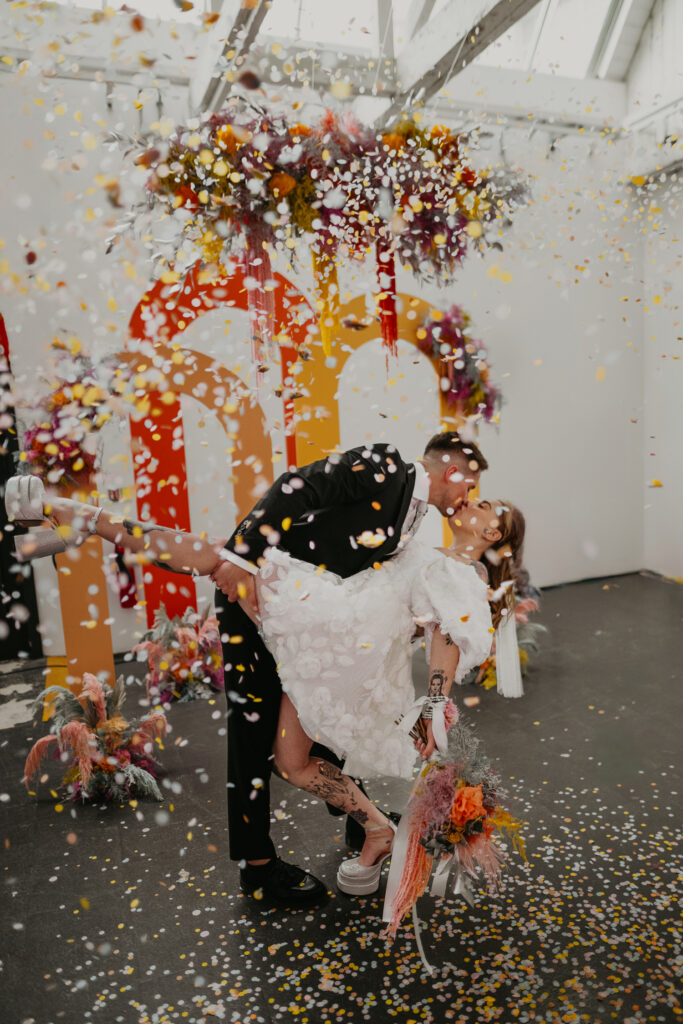
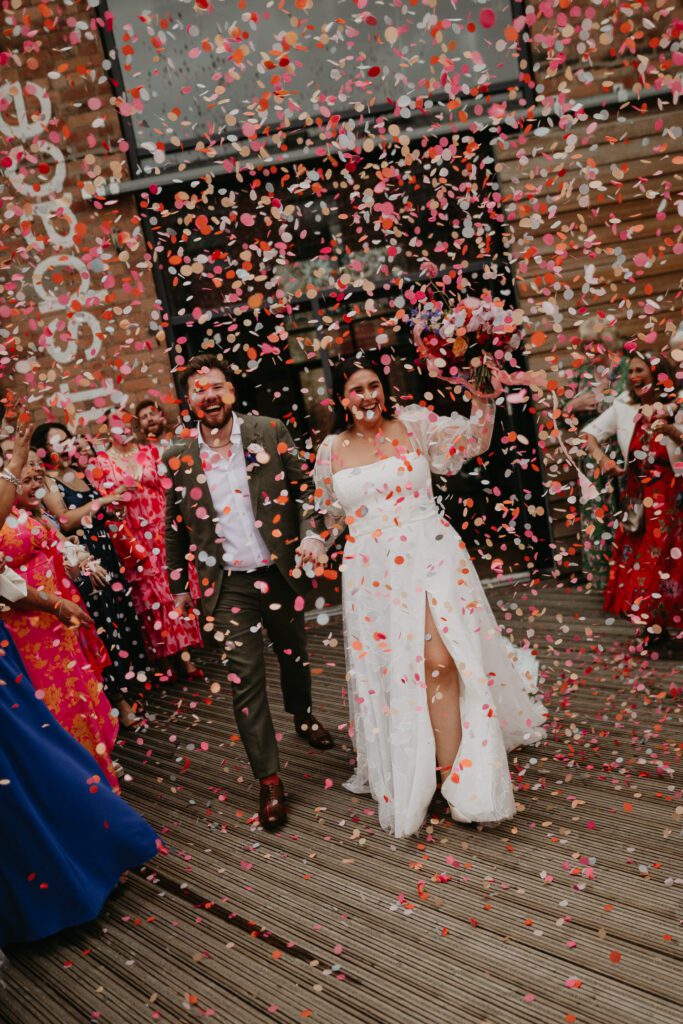
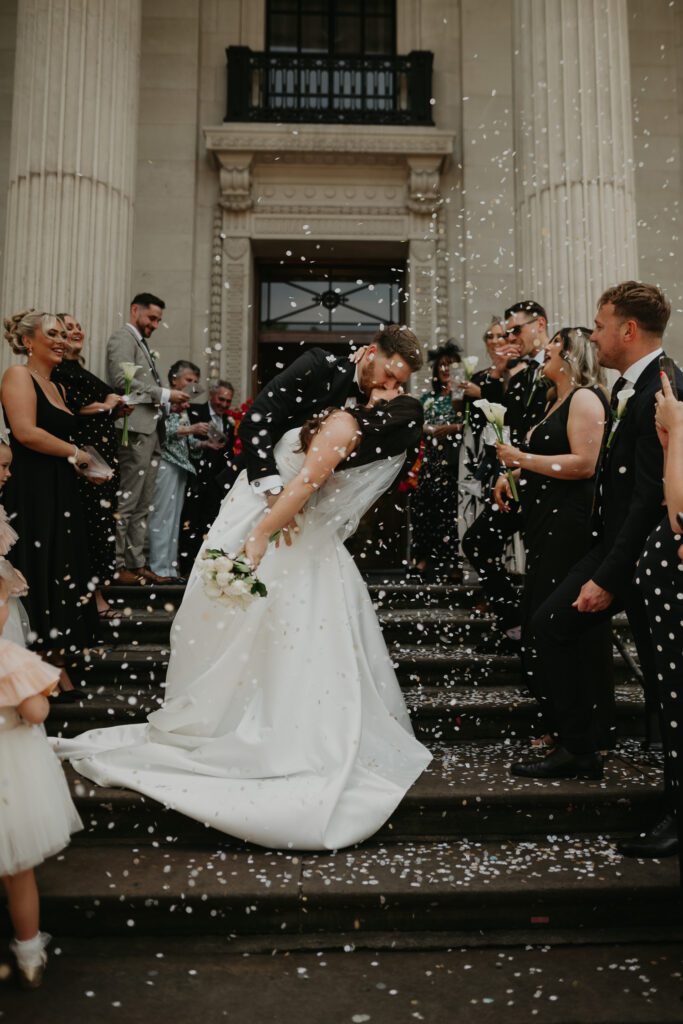
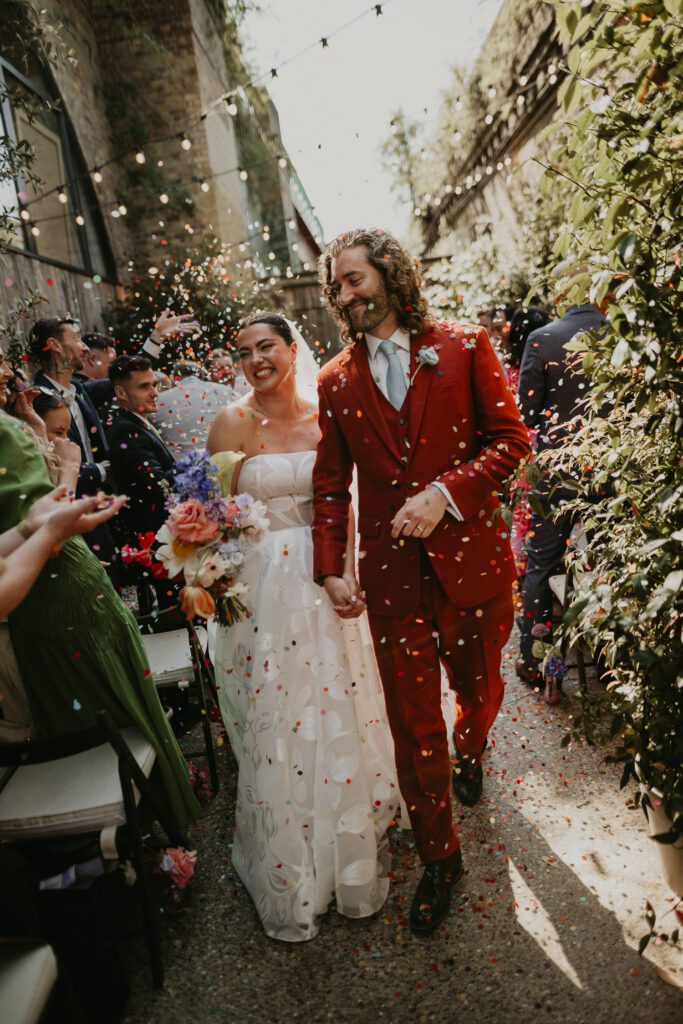
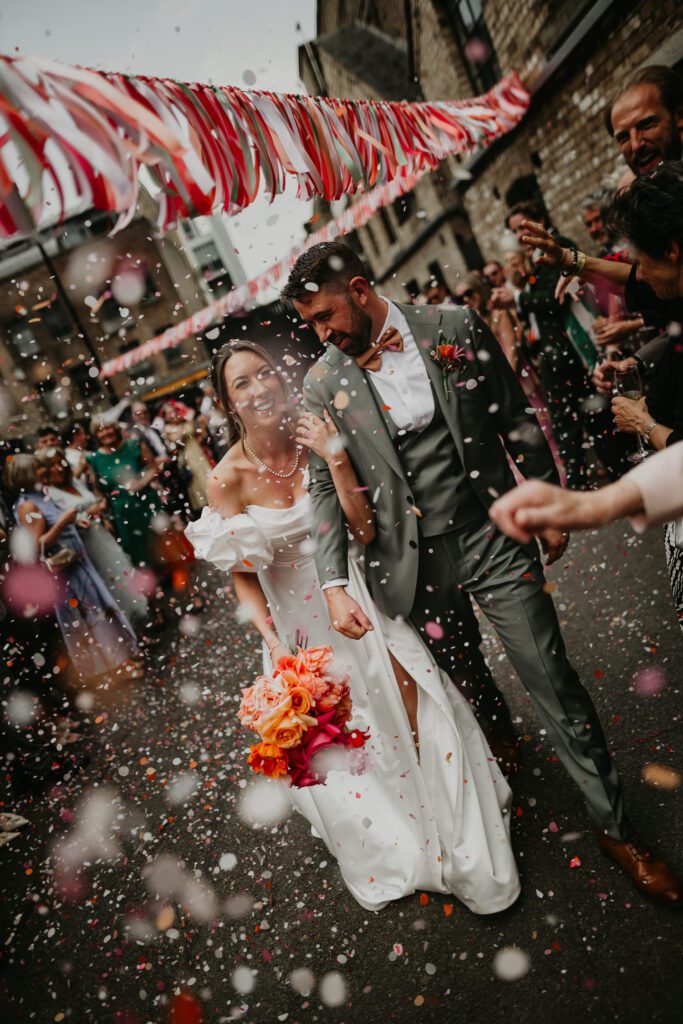
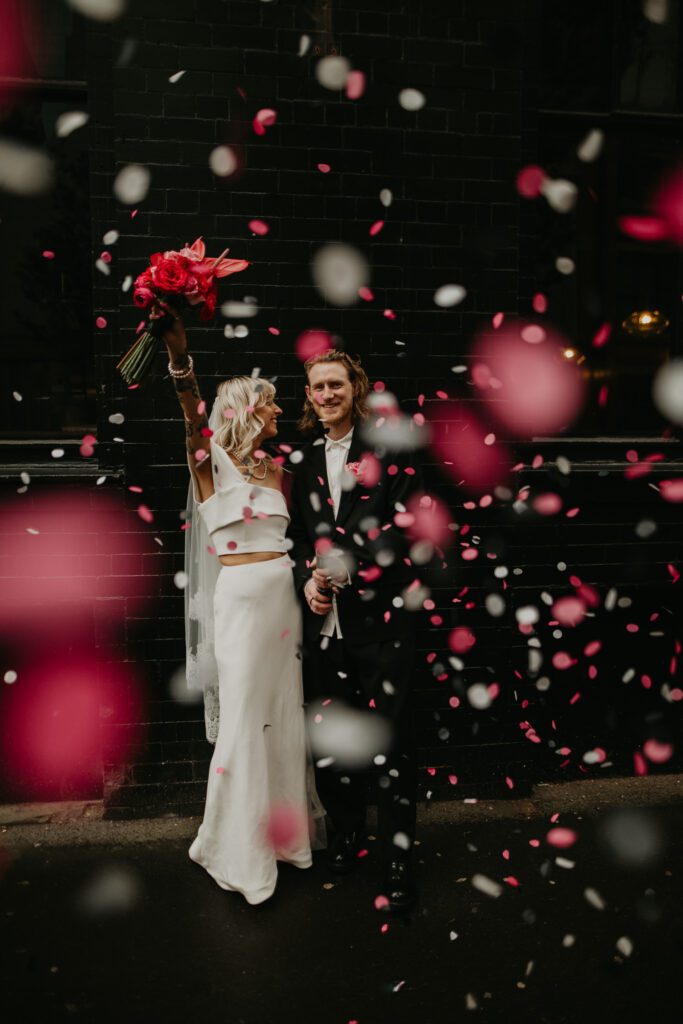
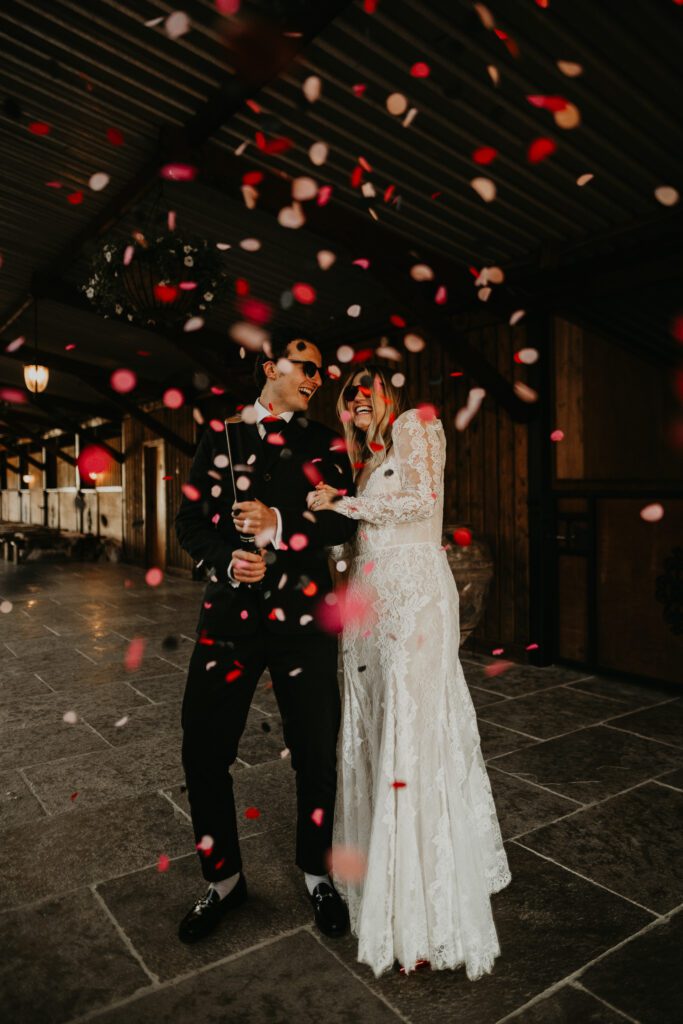

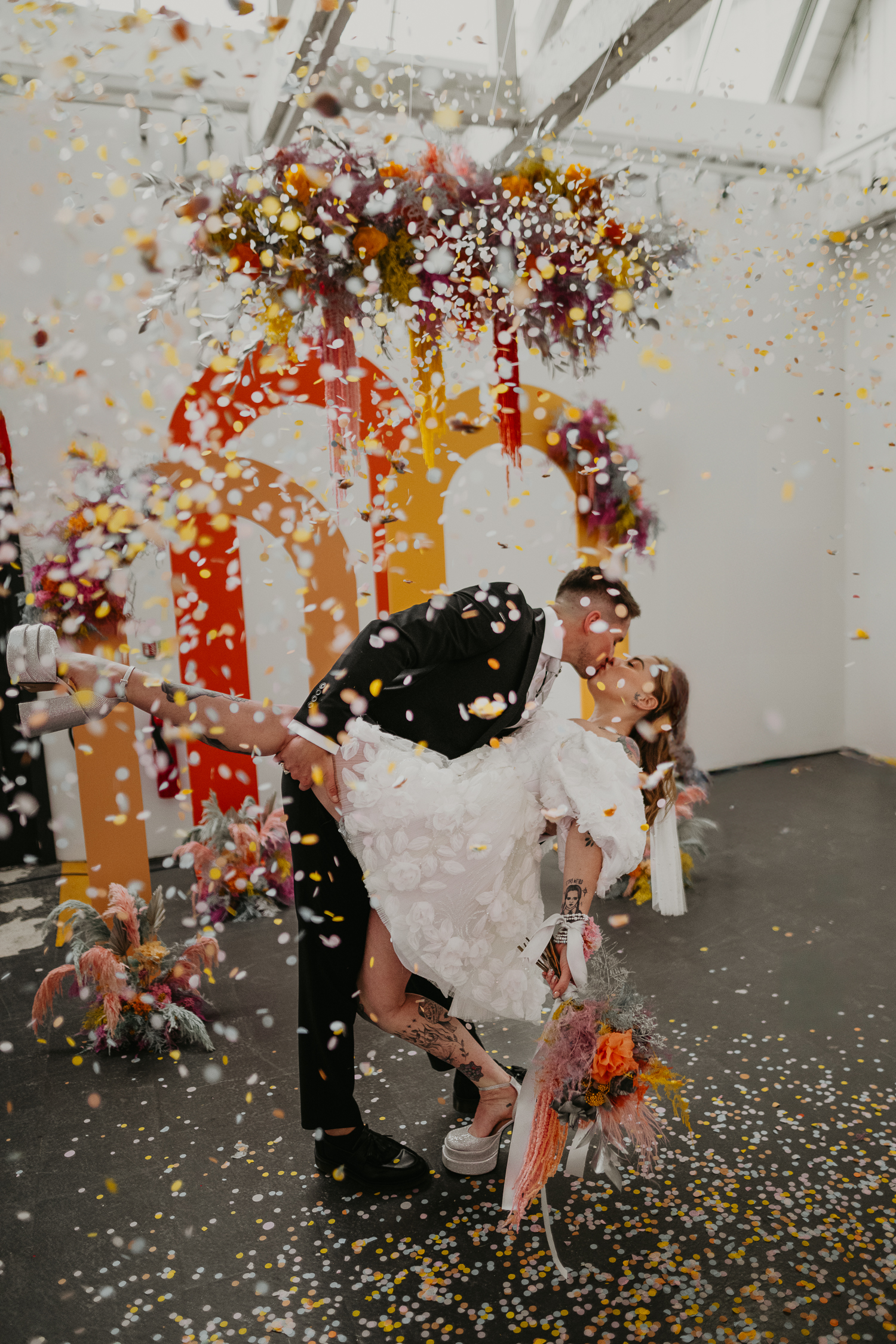
Swap Traditional Confetti for Sustainable Options for a More Low-Impact Wedding.
Confetti is one of the biggest single-use wedding items — and one of the easiest fixes.
Plant-based petal confetti or biodegradable paper options look amazing in photos and break down naturally without harming wildlife or venues. Companies like Just Hitched Confetti specialise in biodegradable confetti that still gives you that epic just-married moment without the environmental guilt.
Same celebration, less waste.
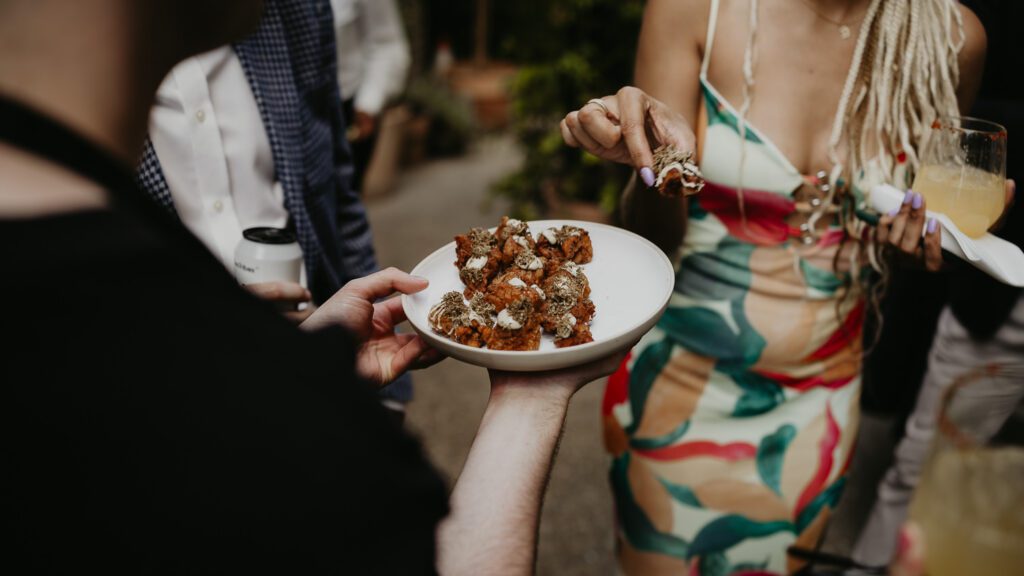


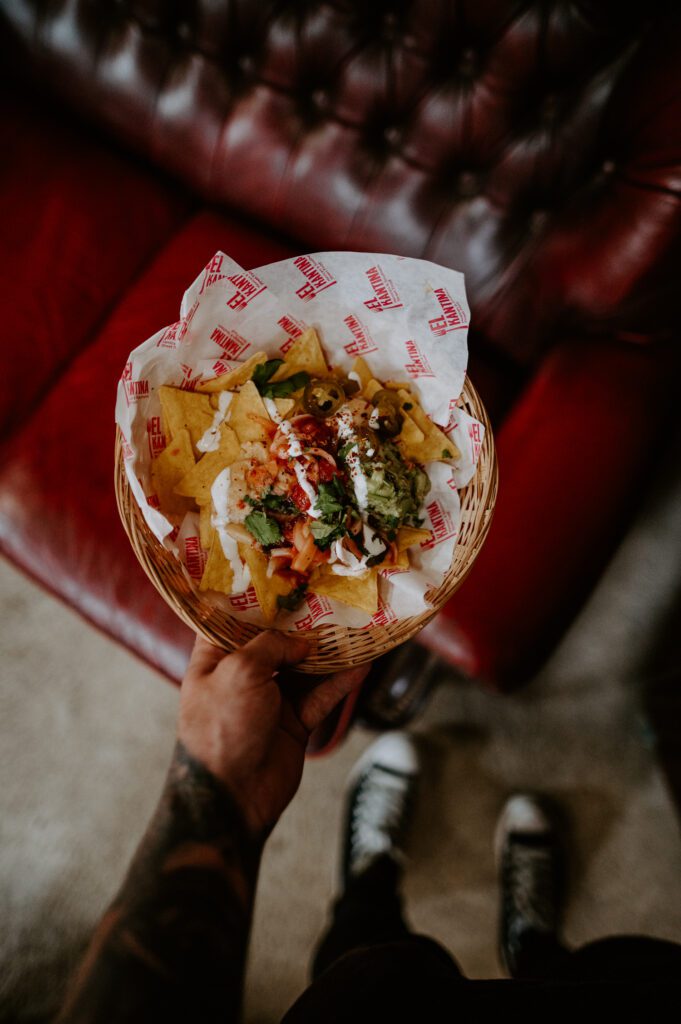


Rethink Food: Local, Seasonal and Plant-Forward for a Planet-Friendly Wedding.
Catering has one of the largest environmental impacts at any wedding. Choosing locally sourced, seasonal ingredients can significantly reduce food miles while supporting nearby producers — something around 26% of couples are now prioritising.
Even small menu adjustments help. Offering vegetarian or vegan options (now chosen by roughly 20% of couples planning greener weddings) lowers carbon impact while often introducing guests to something new and memorable.
Bonus: seasonal menus usually taste better because ingredients are at their peak.


Go Paper-Free (Or Low Paper).
Invitations, RSVP cards, menus, welcome signs — paper adds up fast.
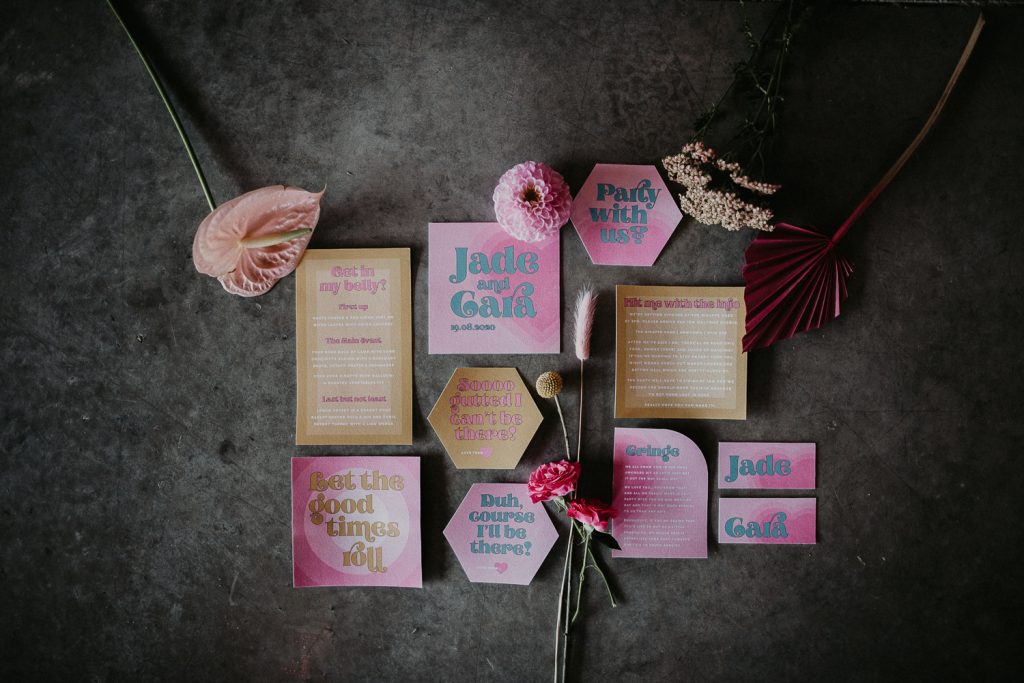
Many couples are switching to digital invitations or wedding websites, reducing printing waste entirely. Around 17% now opt for paper-free stationery, and it’s an easy win environmentally.
If you still love physical invites, consider recycled paper or seed paper that guests can plant afterwards. It turns something temporary into something lasting — which feels pretty fitting for a wedding.
Flowers Without the Waste at Your Green Wedding.
Flowers are beautiful but often incredibly short-lived.
Ask your florist about foam-free arrangements and locally grown blooms. Floral foam contains microplastics and can’t be reused, whereas sustainable mechanics allow arrangements to be repurposed throughout the day.
One of my favourite eco-friendly wedding moments came from a florist who passed along flower offcuts from bouquets and installations instead of throwing them away. Those leftover stems became part of the morning detail photos — giving materials a second life rather than sending them straight to the bin.
After the wedding, flowers can be donated, dried, or gifted to guests instead of discarded.
Wear Pre-Loved or Re-wearable Outfits to Make It a More Sustainable Wedding.
Around 10% of couples now choose pre-loved wedding attire — and honestly, it’s one of the coolest sustainability moves out there.
Vintage dresses, second-hand suits, or redesigned heirloom pieces bring personality while reducing the demand for newly produced garments. Even choosing outfits you’ll wear again after the wedding helps shift away from single-use fashion.
Style and sustainability actually work brilliantly together here.


Cut Down Single-Use Plastics for a More Environmentally Conscious Wedding.
From welcome bags to décor packaging, plastics sneak into weddings everywhere.
Simple swaps make a big impact:
- Glass or reusable drinkware
- Fabric signage instead of foam boards
- Bulk décor instead of individually wrapped favours
- Refillable water stations instead of bottled water
Currently, about 17% of couples actively aim for plastic-free weddings — and venues are increasingly supportive of this shift.
Think About Travel and Carbon Impact to for your Eco-Friendly Wedding.
Guest travel often creates the largest carbon footprint of the entire day.
Encouraging car-sharing, arranging group transport, or choosing venues close to accommodation helps reduce emissions. Some couples also choose to offset their wedding’s carbon footprint through environmental projects — still a small percentage overall, but growing as awareness increases.
It’s not about eliminating travel, just being mindful of its impact.
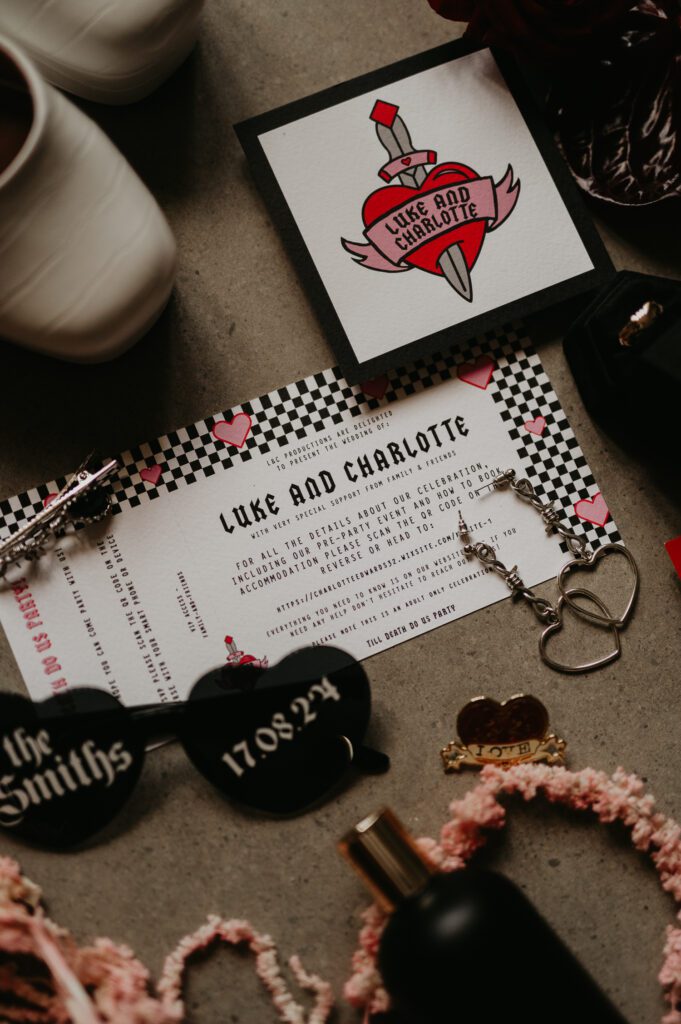
Choose Favours People Actually Keep.
Wedding favours are notorious for being left behind.
Instead, think useful or consumable: potted plants, locally sourced honey, handmade soaps, or edible treats. When guests genuinely want to take something home, waste drops naturally.
Eco-Friendly Weddings Aren’t a Trend.
The best part about planning an eco-friendly wedding is that it often creates a more thoughtful, personal celebration. Every decision reflects your values — from supporting local suppliers to reducing unnecessary waste.
And the impact lasts beyond the wedding day. Many couples find these choices influence how they live afterwards, making sustainability feel less like a one-off decision and more like a lifestyle shift.
You don’t need to do everything perfectly. Just start somewhere.
Because an eco-friendly wedding isn’t about restriction — it’s about celebrating in a way that feels good long after the last dance ends.
If you’re planning a wedding that’s stylish, intentional, and a little kinder to the planet, get in touch via the enquiry form or explore more wedding tips and wedding inspiration.